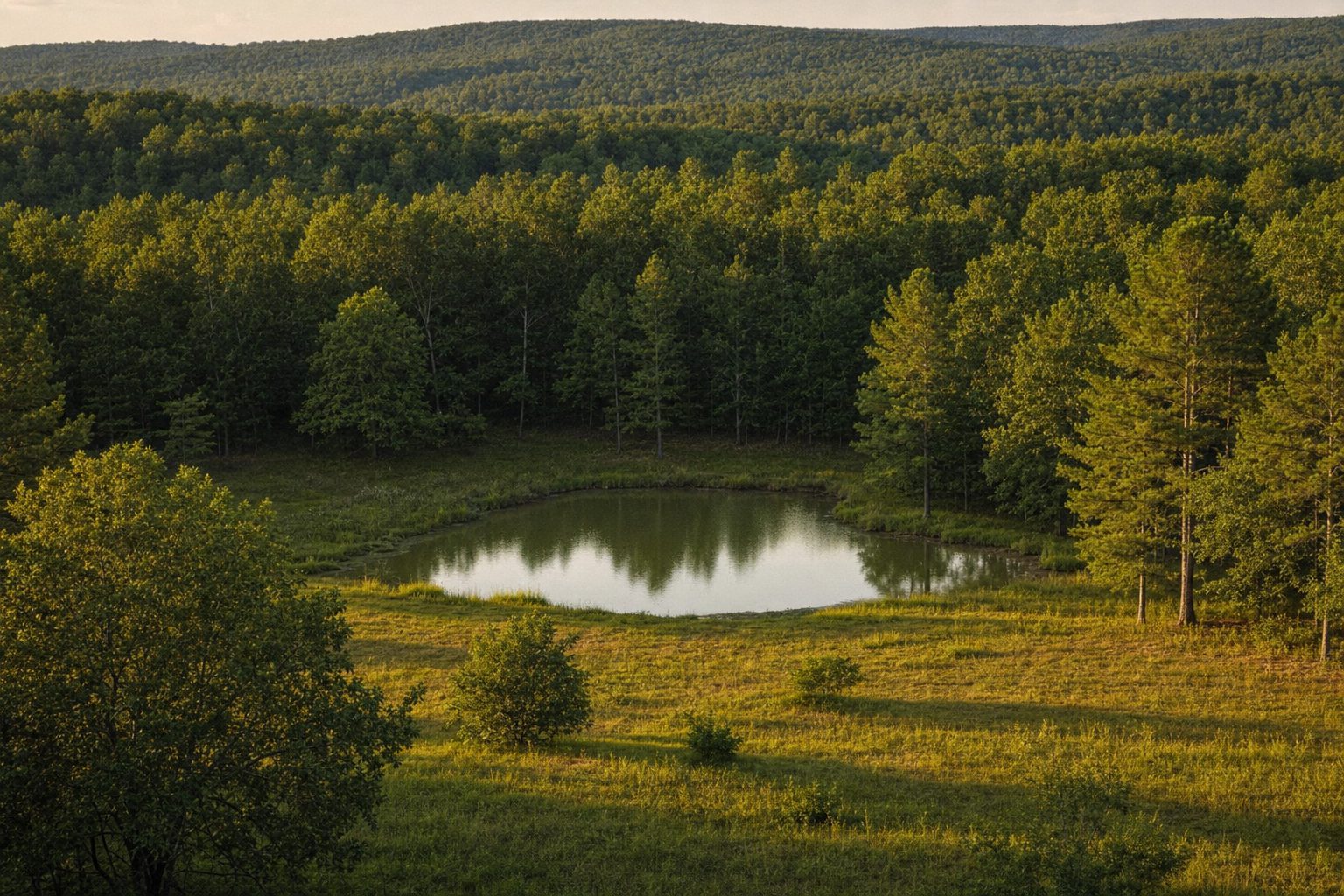
What can you do with raw land in Izard County, Arkansas?
It is Saturday morning, the camper is hitched, and you are wondering if any of this is allowed. You can visit, camp, clear brush, cut a driveway and park an RV, and none of that is where buyers get caught. What trips people up is the permanent half: a dwelling, a septic system, a mobile home. Those answers come from a recorded document attached to your specific subdivision, not from the county line.
I own seven lots in Izard County. Three of them sit in three different additions, and the three additions give three different answers to the same question.
What can you do with raw land in Arkansas without asking anyone?
Quite a lot, and the list is longer than people expect on a rural residential lot.
Walk it, camp on it, bring a tent, sit there for a weekend. Clear brush and small trees. Cut in a rough driveway from the road so you can drive on rather than park on the shoulder. Put up a temporary shelter while you are working. Bring an RV, stay in it while you visit, and take it with you when you leave. Run a metal detector, plant something, dig a test hole to look at the soil.
None of that changes the land permanently, and nothing in the recorded rules on my lots stops any of it.
The line is not activity. The line is permanence, and waste.
Which document decides what you can build on your lot?
The bill of assurance decides, and every platted subdivision in this part of Arkansas has one recorded with the county. Ark. Code § 18-12-103 names it as one of the instruments that can carry a restrictive covenant, a limit on how land may be used or developed, and says the covenant takes effect once the owners sign it and it is recorded. It is the private set of rules the original developer attached to the land, and it runs with the deed. It is not the county, it is not zoning, and it does not show up in a listing photo.
It is also where the real restrictions live.
Here is what mine say, addition by addition.
| Addition | Lot | Minimum dwelling |
|---|---|---|
| North Shore | Lot 192 | 1,100 sq ft including carport, 950 sq ft heated on the first floor, single family |
| Spring | Lots 29 to 32 | 1,000 sq ft, site built |
| Tract D | Lot 3, Block 15 | 550 sq ft |
Same town, same county, three numbers. A buyer who reads one addition's rules and assumes they apply to the lot next door has read the wrong document. I went through how that plays out in minimum build size on rural land in Arkansas.
Two words in that table do more work than the numbers. "Site built" in the Spring addition means the dwelling has to be constructed on the lot. That is the sentence that quietly answers the mobile home question for those four lots, and it has nothing to do with square footage.
Can you live on raw land in an RV?
It depends on two documents, and this is the question I get most and the one where I refuse to give a cleaner answer.
Camping on your own lot and living on it are treated as different things almost everywhere, and the difference usually turns on two documents rather than on how long you stay. The first is the bill of assurance, which defines what counts as a dwelling in that addition. The second is waste. The Arkansas Department of Health requires a permit before a septic system is installed, uses soil pits rather than a percolation test to evaluate the ground, requires a licensed installer, and sets no minimum lot size for a system. There is one narrow exemption in Ark. Code § 14-236-104, for a tract of 10 acres or more where the disposal line sits at least 200 feet from the property line, and no lot of mine comes close to it. The same section generally holds a system in a subdivision platted before July 1, 1977 to the standards in effect when it was platted, unless the state finds a health hazard or a nuisance, so the plat date on your addition is worth reading too.
I have not obtained a county ruling on full time RV occupancy for any of my lots, and I am not going to pretend otherwise. What I tell buyers is to call the county before they buy on that plan, not after. The full picture of what a septic system involves is in septic systems on rural land in Arkansas, and the wider RV and camping question is in building or camping on your land.
What will the land itself not give you?
Power, water and waste do not come with the deed. Rules are one half and physical reality is the other, and it is the half that decides what any of this costs.
Electricity is priced by distance from the existing line, not by the lot. Water is either a connection or a well. Waste is a septic system on almost every rural lot. None of the three arrives because you own the ground. I laid out how they stack up, and what I could not price, in the cost of putting utilities on raw land.
One honest note on my own inventory. I have not drilled a well or installed a septic system on any of my lots, so every number I quote on those two comes from published sources rather than from my own invoices. Where I do not know, I say so.
How do you check the rules in ten minutes before you buy?
You run four steps in order, and they cost nothing.
Get the parcel number and pull the assessor record, which for Izard County, Arkansas is public at actDataScout. Read the legal description off it, because that names the addition. Ask the county clerk for the bill of assurance recorded for that addition by name, and read the dwelling clause. Then read the plat for the same addition, which tells you the setbacks and any easements crossing the lot.
If you want to run that exercise against a real parcel instead of a hypothetical one, every lot page on this site prints the parcel number and the legal description together, for example the Spring addition lot.
FAQ
What can you do with raw land in Arkansas?
Visit it, camp on it, clear brush, cut a driveway, park an RV while you are there. The permanent things, a dwelling or a septic system, are governed by the bill of assurance recorded for your addition and by the state permit rules, not by the listing.
Can you live on raw land in an RV in Arkansas?
Camping and full time occupancy are treated differently. Full time raises what the addition allows as a dwelling and how waste is handled legally. I have no county ruling on this for my own lots, so ask the county before you buy on that plan.
Do you need a permit to clear trees on your own land in Arkansas?
Clearing brush and small trees on a residential lot you own is ordinary maintenance and nothing in my recorded rules prevents it. Commercial timber harvesting is a separate activity, and a recorded easement crossing your lot is not yours to clear at will.
What decides the minimum house size on a lot in Horseshoe Bend?
The bill of assurance for the addition. Mine carry 1,100 square feet including a carport in North Shore, 1,000 square feet in Spring, and 550 square feet on Tract D.
Can you put a mobile home on raw land in Izard County?
Only if the addition allows it. Some recorded bills of assurance require a site built single family dwelling, which rules a mobile home out no matter its size. Pull the document for the specific lot before assuming.
What usually stops a buyer's plan?
The recorded rules for your particular addition, far more often than the county, and they take one phone call and one afternoon to read. Do that before you buy the lot, not after you have drawn the house.
This is not financial or legal advice. Recorded subdivision rules, county requirements and state health regulations vary by addition and change over time. Confirm the bill of assurance, the plat and the septic rules with the Izard County clerk and the Arkansas Department of Health, and have your own attorney review anything you sign.