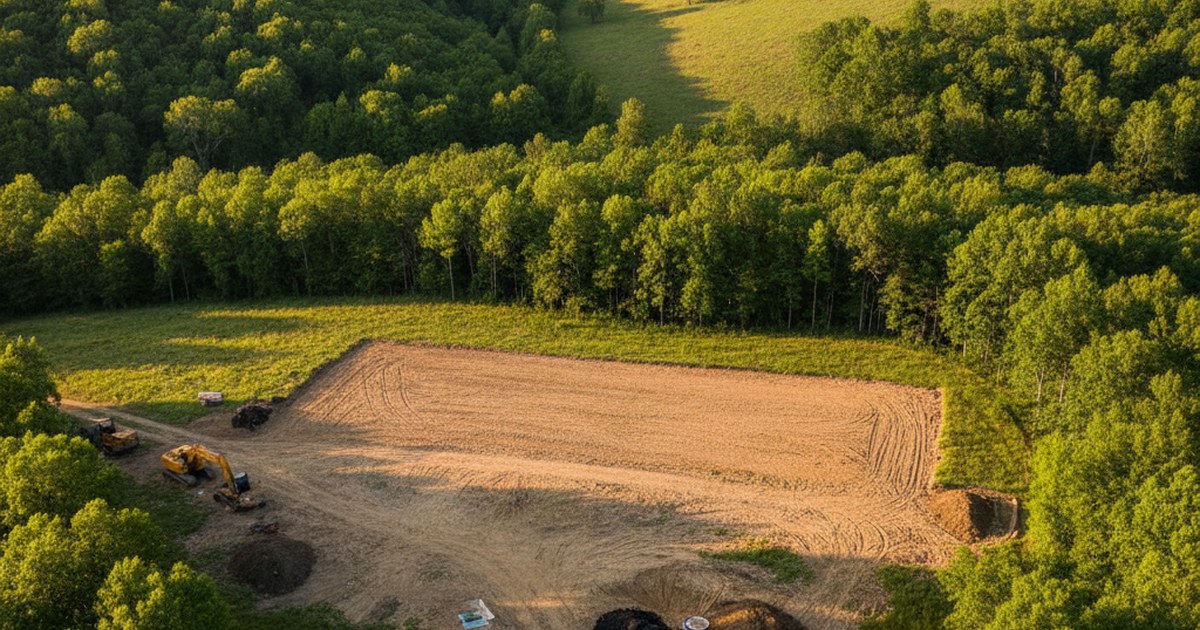
If you buy raw land in the Ozarks, there is no city sewer waiting for you. You need a septic system, and installing one on rural land in Arkansas starts with a perc test. Skip that check and you can buy a lot you cannot legally build on until the soil problem is solved.
Want to practice on a real parcel? This 0.35 acre lot near Crown Lake in Izard County, Arkansas ($2,499 cash, owner financing available) prints its parcel number and legal description on the page, so you can pull the county record and run every check in this post against it.
What is a septic system on rural land
A septic system is a self-contained way to handle household waste when there is no municipal sewer line. Water leaves the house, flows into a buried tank, often around 1,000 gallons, where solids settle, and the liquid drains out into a leach field where the soil filters it.
City lots plug into a sewer. Rural lots do not. That is the trade you make for cheap land far from town. The dirt is affordable because the infrastructure is not there yet, and the septic system is a big part of what you are adding.
Most buyers picture the tank and forget the drain field. The field is the part that depends on your soil, and the soil is the part that can quietly kill a deal.
Do you need a septic system on rural land in Arkansas?
Almost always. Raw rural land rarely sits near a sewer main, so waste has to be treated onsite. That means a septic system.
In Arkansas, onsite wastewater systems are regulated by the Arkansas Department of Health. Before you install, you generally need a soil evaluation and a permit through the local county health office. The rules exist because a failed system pollutes groundwater, which is the same groundwater a neighbor's well may pull from.
So the question is not really whether you need a septic system. On buildable rural land, you do. The real question is whether the specific lot can support one, and that is what the perc test answers.
What is a perc test and why it matters
A perc test, short for percolation test, measures how fast water drains through the soil. Someone digs a hole, fills it with water, and times how quickly it soaks away. The rate tells you what kind of septic system the land can hold.
Good drainage means a conventional system will likely work. Poor drainage, shallow bedrock, or a high water table means you may be pushed into an alternative system that costs a lot more. In some cases a lot fails badly enough that building a normal home becomes impractical.
This is why a smart buyer treats the perc test as due diligence, not paperwork. On flat, well-drained land in a proven subdivision the risk is lower. On an isolated lot with unknown soil, the perc test is the difference between a buildable parcel and a nice photo.
If a seller cannot tell you whether the soil percs, assume it is unknown and price that risk in.
How much does a septic system cost
Costs vary by soil and system type, so treat these as general ranges and confirm with a local installer.
A conventional gravity system typically runs from a few thousand dollars up to around ten thousand to install. An alternative or engineered system, the kind you need when soil drains poorly, often costs two to three times more. The perc test or soil evaluation itself is usually a few hundred dollars.
The point is not the exact number. The point is that septic is a real line item on top of the land price. On a cheap lot, the septic system can cost more than the dirt did. Budget for it before you buy, not after you own it.
Conventional versus alternative septic systems
The system your land can hold comes down to the soil. Here is the difference in plain terms.
| Factor | Conventional septic | Alternative or engineered septic |
|---|---|---|
| Soil requirement | Passes the perc test, drains well | For poor drainage, high water table, or shallow rock |
| Typical cost | Lower, a few thousand and up | Higher, often two to three times more |
| Main components | Tank plus a gravity drain field | Tank plus a pump, mound, or aerobic treatment unit |
| Permit path | Standard county and state permit | Permit plus an engineered design |
| Upkeep | Low | Higher, sometimes annual inspection |
Most buyers want the conventional system because it is cheaper and simpler. You only end up in the alternative column when the soil forces you there. That is exactly why you check the soil first.
Who is responsible for the septic system
On raw land, the buyer is. There is no system in the ground when you buy an undeveloped lot, so the install is your cost and your job.
Deed restrictions usually spell this out. The Bill of Assurance for a subdivision often states that the septic is the buyer's responsibility, along with the minimum home size and setbacks. Read that document before you buy, because it tells you what you are actually signing up to build.
A good seller is upfront about this. A vague seller who implies the lot is somehow ready to go is either uninformed or hoping you will not ask.
Septic by buyer: a real example from my land
I own two parcels in Izard County, Arkansas, in the Tract D section of Horseshoe Bend Estates. One is 0.25 acres on Pavilion Ln, the other is 0.28 acres on Ranchview Rd. Both are raw land in the Ozarks with no sewer service.
The Bill of Assurance for Tract D is direct about it. The minimum home is 550 square feet, single-family, with setbacks of 35 feet in front and 30 feet in the rear, and the septic is listed as septic by buyer. That is not a surprise buried in fine print. It is the normal deal on this kind of land, and I say it plainly to anyone who asks: the lot is cheap because you are the one adding the well and the septic.
When I look at a parcel like this, I want two things clear before money moves. First, that the subdivision is a place where homes already exist and systems already work, so the soil is a known quantity. Second, that the buyer understands septic is part of the build budget from day one.
These are the honest questions. Cheap land is real, but it is raw. The septic system is where raw becomes buildable.
Your septic checklist before you buy
Run this before you commit to any rural lot:
- Ask whether the soil has passed a perc test, and if not, whether one can be scheduled before closing.
- Call the county health office and ask what an onsite wastewater permit requires in that area.
- Read the Bill of Assurance or deed restrictions to confirm who installs the septic and what the minimum build is.
- Get a rough install quote from a local septic contractor so the cost is a number, not a guess.
- Confirm whether neighbors on the same street already have working systems, which is a strong signal the soil cooperates.
Water access is the twin of this question, and my guide on off-grid living on raw land walks through power, water, and waste together. If you are thinking about a camp or an RV setup while you plan the build, see how to build a camp or park an RV on your land. Septic is one item on a longer list, so run through my full rural land due diligence checklist before you contact any seller, and if you are new to the state, start with how to buy land in Arkansas.
Have a specific parcel in mind and want to think through the septic side? Describe the lot and the subdivision. If it sits near any of my parcels in Izard County, I can tell you what the septic picture usually looks like on that kind of land.
This is not financial or legal advice. Buying land involves risk. Do your own research before purchasing any property.
FAQ
What is a perc test?
A perc test, short for percolation test, measures how fast water drains through the soil on your land. The county or a licensed evaluator digs a hole, fills it with water, and times how quickly it soaks in. The result decides whether the soil can support a conventional septic drain field or whether you need a more expensive engineered system. On rural land you usually want this done before you buy, not after.
Do you need a septic system on rural land in Arkansas?
Almost always, yes. Raw rural land rarely connects to a municipal sewer, so waste has to be handled onsite with a septic system. In Arkansas, onsite wastewater systems are regulated by the Arkansas Department of Health, and a soil evaluation plus a permit are typically required before you install one. If a lot cannot pass the soil check, you cannot legally build a home on it until that is solved.
How much does a septic system cost?
It depends on the soil. A conventional gravity septic system typically runs from a few thousand dollars up to around ten thousand to install. An alternative or engineered system, used when soil drains poorly or the water table is high, often costs two to three times more. A perc test or soil evaluation itself is usually a few hundred dollars. Always confirm current pricing with a local installer.
Who is responsible for installing the septic system?
On raw land, the buyer is. When you buy an undeveloped lot, there is no system in place, so installing the septic is your cost and your responsibility. Deed restrictions often state this directly. On my Tract D parcels in Horseshoe Bend, the Bill of Assurance literally reads septic by buyer. Budget for it as part of your total build cost, not as an afterthought.
Can you build on rural land without a septic system?
Not a permanent home, in most cases. Without a sewer connection, the county will require an approved onsite wastewater system before it issues a building permit or certificate of occupancy. Some owners camp or park an RV first, but living in a permanent dwelling without an approved septic is generally not allowed. Check with the county before you plan anything.