How to check if land is in a flood zone: open the FEMA Flood Map Service Center at msc.fema.gov, search the address or the coordinates of the parcel, and read the zone label printed over the land. It is free, it takes about five minutes, and it is the single cheapest piece of due diligence in the whole purchase.
The harder part is knowing what the answer does and does not tell you.
How to check if land is in a flood zone, step by step
Five minutes, no account, no fee.
- Get the parcel's location. Address if it has one, coordinates if it does not. Many rural lots do not have a useful street address, which is why the county parcel number matters more than the address on the listing.
- Open msc.fema.gov and search that location. FEMA runs the map service, and the public search is the same one lenders and insurers reference.
- Read the zone printed over the parcel. The map shades and labels each area. What you want is the letter code sitting on top of your lot, not the code for the county in general.
- Zoom in until you can see the lot boundary. A parcel can sit half in and half out of a mapped zone. On a small lot, that half matters.
- Save the map panel. Screenshot it with the date. If a seller ever tells you something different, you have what the public record said on the day you looked.
If the seller has already done this and cannot show you the result, that tells you something too.
What the flood zone letters actually mean
The letter is the whole message, and there are only a few worth memorising.
| Zone | What FEMA is saying | What it means for you |
|---|---|---|
| X | Outside the special flood hazard area | No federal flood insurance requirement for a mortgage. The zone most buyers want |
| A | Inside the one percent annual chance floodplain, no base flood elevation published | Insurance required by federally backed lenders. Building usually needs an engineer to establish the elevation |
| AE | Inside the same floodplain, with a base flood elevation published | Same insurance picture, but the required height is a known number |
| AO, AH | Shallow flooding, ponding or sheet flow | Often a drainage path rather than a river. Still inside the hazard area |
| D | Not studied | No determination has been made. Absence of a zone is not a clean result |
Two things people misread. First, "one percent annual chance" is the correct name for what everyone calls the hundred year floodplain, and it means a one in a hundred chance in any given year, not once a century. Second, Zone D is not good news. It means nobody mapped it.
What does the flood map miss?
A clean flood map answers the lender's question. It does not answer yours.
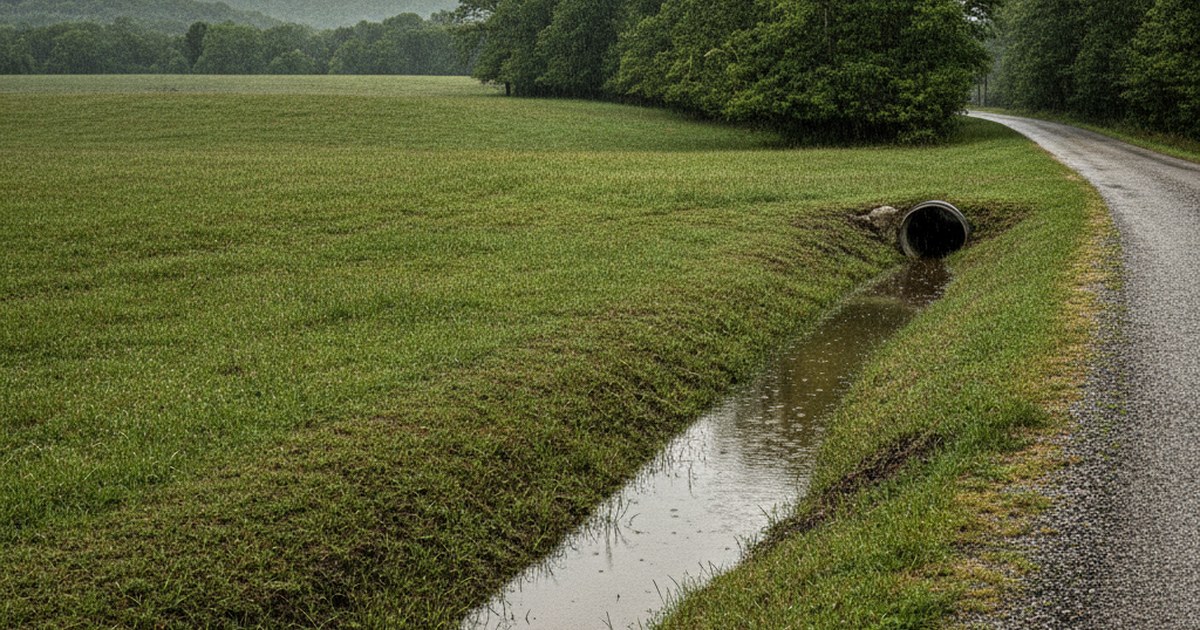
FEMA models rivers, creeks and large drainage systems. It does not model the low corner of a 0.27 acre lot that holds water for two days after a heavy Ozark rain. Plenty of land sits comfortably in Zone X and still has a soft spot you would not want to put a foundation on, or a driveway line that turns to soup every spring.
So run the map check first, because it is free and it rules out the expensive problem. Then ask the terrain questions separately.
- Where is the low point of the lot, and where does water leave it?
- Is there a ditch, culvert or drainage easement along the road frontage?
- Does the ground slope toward the road or away from it?
- What does the soil do after rain, which is the same question a septic percolation test answers in a stricter form. I went through that in the post on septic systems on rural land in Arkansas.
Those are questions for contour lines, for a visit, or for someone local. They are not questions a flood map or a listing photo can settle, and I would rather say that than pretend otherwise. The wider list of what a screen can and cannot tell you is in the post on buying land sight unseen.
What I check on my own parcels
I own seven lots in Izard County, Arkansas, in and around Horseshoe Bend. Every one of them went through this check before I paid, because the map lookup is free and being wrong is not.
The one I point people to most often is the 0.35 acre lot in the North Shore addition. It has legal road frontage, its taxes run under $60 a year, and it sits outside the FEMA flood zone. That last line is only worth writing because I looked, and it is the same line a buyer can verify without taking my word for it.
Where I stop is honest and deliberate. I have never claimed to a buyer that I know how a specific lot drains after a storm, because I have not stood on it in the rain. Ownership records, parcel identity, build rules, taxes and flood zone are all things I can verify from a laptop and hand over. Slope and soil behaviour are things a visit answers.
That split is the whole point. Verify what the record can prove, and be clear about the rest instead of filling the gap with adjectives.
Where the flood check sits in the rest of the homework
Flood zone is one of six checks, and it is the fastest of them. The others are legal access, allowed uses and build rules, utilities or off grid options, property taxes, and a clear chain of title. Skipping any one of them is where most land regret comes from, and I laid out the full sequence in the rural land due diligence checklist.
Access deserves a mention here because the two questions interact. A lot that reaches its road across a low drainage crossing can be perfectly dry itself and still be unreachable for part of the year. The access side of that is covered in the post on landlocked land and legal road access.
FAQ
How do I check if land is in a flood zone for free?
Use the FEMA Flood Map Service Center at msc.fema.gov. Search by address or by the coordinates of the parcel, open the map for that area, and read the zone label printed over the land. It costs nothing and takes about five minutes.
What does flood zone X mean?
Zone X is land FEMA maps outside the special flood hazard area, meaning it is not in the mapped one percent annual chance floodplain. Federally backed lenders do not require flood insurance there. It is the zone most buyers want to see, and it is not a promise the ground stays dry.
What is the difference between zone A and zone AE?
Both sit inside the mapped one percent annual chance floodplain. Zone AE comes with a base flood elevation, a specific height the water is expected to reach. Zone A does not have that number published, so an engineer usually has to work it out before anyone builds.
Can land outside a flood zone still flood?
Yes. Flood maps model rivers and large drainage systems, not the low corner of a half acre lot after a heavy Ozark rain. A clean map answers the insurance and lending question. Only the terrain and someone standing on it answers the puddle question.
Should I buy land in a flood zone?
It depends what you plan to do with it. Land in a mapped flood zone is often cheaper and can still work for recreation or storage. It changes the cost and difficulty of building and of insuring anything you put there, so price it in rather than ruling it out on reflex.
A flood map is a five minute check that removes one of the two expensive surprises in raw land. The other one is access. Neither of them needs money, a professional or a plane ticket, and both of them get skipped constantly because the price of the lot felt too small to justify the effort.
Want to run the check on a real parcel? Here is the lot on Ranchview Drive in Horseshoe Bend, with the parcel number listed so you can pull it up on the FEMA map yourself before we ever speak. What did the map say when you looked?
P.S. We wrote down the 12 questions worth asking any owner financing seller before you send money, with our own answer next to each one. It is free, it is three pages, and you can get it at the top of this page.
This is not financial or legal advice. Buying land involves risk. Do your own research before purchasing any property.