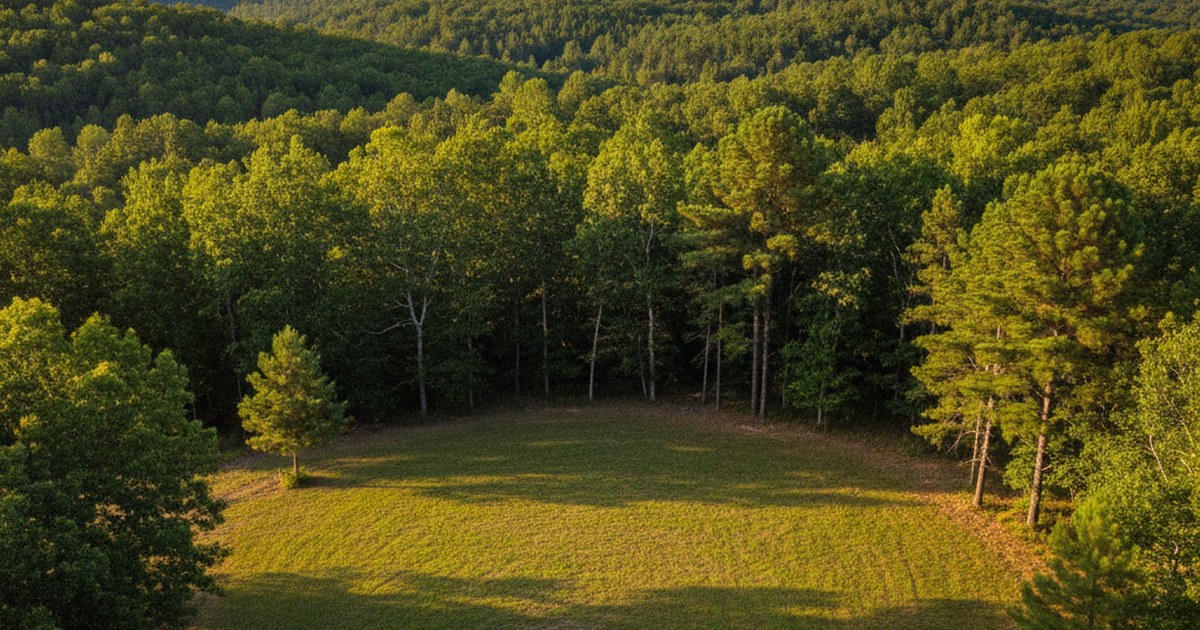
Can you put an RV or build on rural land you buy? Usually yes, you can do at least one of those, but it depends on the county where the land sits. Many rural lots let you camp, park an RV, or build a cabin with the right permits, while a few allow very little. The land is yours, but the county sets the rules for what you can do on it.
Can you put an RV or build on rural land?
When you own a piece of rural land, you generally have a few common uses in mind. Building, camping, or parking an RV. Each one carries a different level of approval, and that level is set locally.
Here is the general picture, with camping usually being the easiest to get approved and building the most involved.
| Use | Usually how hard | What it often needs |
|---|---|---|
| Camping | Easiest, with possible day limits | Sometimes a permit |
| Parking an RV | Depends on county | Often a permit, sometimes septic |
| Building a cabin or home | Most involved | Building and septic permits |
| Off-grid setup | Doable in many areas | Well, septic, and solar planning |
Treat this table as a starting point, not the law. The only authority that counts is the county where the parcel sits. If you are still at the stage of choosing a lot, my beginner's guide to buying cheap rural land covers how to find one.
Building a cabin or home
Building is the dream for a lot of land buyers. A small cabin, a place to get away, maybe a future home.
In many rural counties you can build, but you will likely need a building permit, and the county may have rules on minimum size, setbacks of roughly 10 to 25 feet from the property line, and septic systems. Some lots are fully buildable. Some have restrictions. A few do not allow a permanent structure at all.
Do not assume. If building is your reason for buying, confirm it with the county zoning and building office for that exact parcel before you pay. A listing that says "buildable" is a starting hint, not a guarantee. Running a full due diligence checklist before you buy catches this before your money is in.
Camping and parking an RV
Camping is usually the simplest thing to do on land you own. In many rural areas you can pitch a tent or stay in a trailer on your own parcel, though some counties cap it at 14 to 30 days in a row.
Parking an RV sits in the middle. Some counties let you park and even live in an RV on your land, some allow it only seasonally or temporarily, and some require a permit or a septic hookup before you can stay overnight. This is one of the most county-specific rules out there, so it is worth a direct call.
If your plan is to use the land now, while you decide what to do long term, camping or an RV is often the fastest way to start enjoying it. Just confirm the day limits and permit rules first.
Off-grid use
A lot of rural buyers want off-grid, and rural land is well suited to it. Off-grid means you provide your own power and water instead of hooking to the city grid.
In practice that means solar for power, a well or hauled water for water, and a septic or composting system for waste. None of this is exotic. People do it every day. But a septic system usually needs a county permit and a soil test, so off-grid still runs through the county for the parts that touch health and safety.
Plan the off-grid setup before you buy, and confirm the parcel can support a well and septic if that is your goal.
The questions to ask your county before you start
The county where the land sits is the boss of what you can do on it. Not the seller, not a blog, not a neighbor. Before you build, camp, or move an RV in, call the county planning and building department and ask these directly.
- Can I build a structure on this parcel, and what permits do I need?
- Is there a minimum building size or setback requirement?
- Can I live in or park an RV here, and for how long?
- Can I camp on the parcel, and are there day limits?
- Do I need a septic permit, and does the soil support a septic system?
- Do I need a driveway or access permit to reach the lot?
Write down who you spoke to and what they said. Rules change and vary by county, so the answer for one parcel is not the answer for another. We keep this general on purpose. Your county has the real, current rules, and they are the ones that count.
What this looks like on land I sell
I sell rural land in Izard County, Arkansas, so here is a concrete example instead of generalities.
One of my lots is 0.35 acre near Crown Lake. On a parcel like that in this part of Arkansas, camping and an RV are the easy starting uses, and building a cabin is possible with a county building permit and a septic permit. The entry is small too: that lot is $2,499 cash, or $49 down and $105 a month for 48 months. I always tell buyers to call Izard County directly and confirm the exact permits for their plan before they pay, because the county, not me, is the authority on what you can do there. If you want the cost side first, I broke it down in how much money it takes to buy rural land.
FAQ
Can you build a cabin on rural land you buy?
Often yes, but it depends on the county's zoning and building rules for that parcel. Some rural lots allow a cabin or home with a building permit, others have minimum size or setback rules, and a few do not allow building at all. Confirm with the county zoning office before you buy if building is your goal.
Can you live in an RV on land you own?
It depends on the county. Some allow you to park and live in an RV full time, some allow it only temporarily or seasonally, and some require a permit or a septic hookup first. Rules vary a lot between counties, so ask the county directly what is allowed on that specific parcel before you plan to live there.
Can you camp on your own rural land?
In many rural areas you can camp on land you own, sometimes with limits on how many days at a time. Other counties restrict or require a permit for camping. Camping is usually the easiest use to get approved, but you should still confirm the local rules for the parcel before relying on it.
What permits are needed to build or park an RV on rural land?
Common permits include a building permit for structures, a septic or wastewater permit, a driveway or access permit, and sometimes a temporary use permit for an RV. Which ones apply depends entirely on the county and the use. Call the county planning and building department and ask exactly what your plan requires.
Who decides what I can do with my rural land?
The county where the land sits sets the zoning and building rules, so the county is the authority on what you can build, camp, or park there. A seller's listing is not a substitute for the county's answer. Always verify allowed uses and permits directly with the county before you start.
Thinking about a lot you can camp on now and build on later? Leave your email below and we will send you current owner-financed parcels along with the county and zoning details, so you can ask the right questions before you commit.
Want to see real numbers instead of "depends on the county"? Each of our parcel pages shows the recorded build minimum for that subdivision — the Pavilion Ln lot has the lowest in our inventory at 550 sq ft. All lots: available land.
This is not financial or legal advice. Buying land involves risk. Do your own research before purchasing any property.